


Architect
João Branco + Paula del Río
Collaborators
Gerson Rei
Marco Silva
Photography
© do mal o menos
© Frederico Martinho
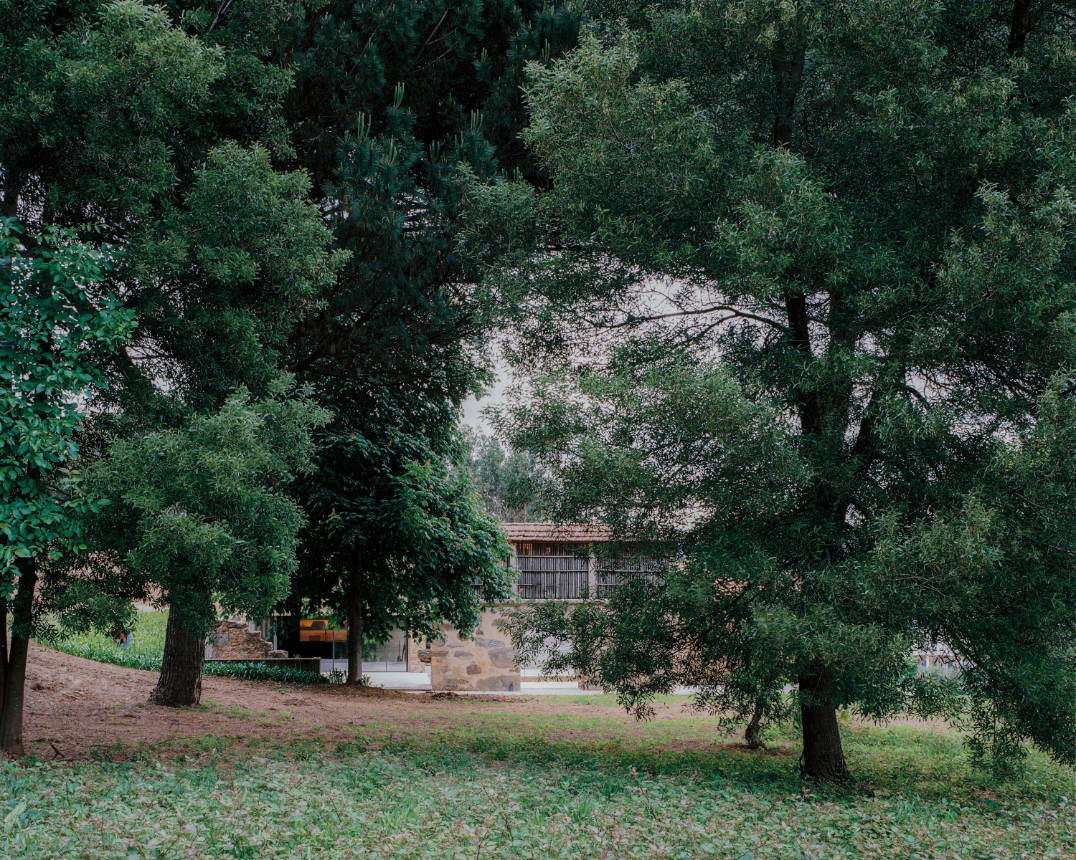
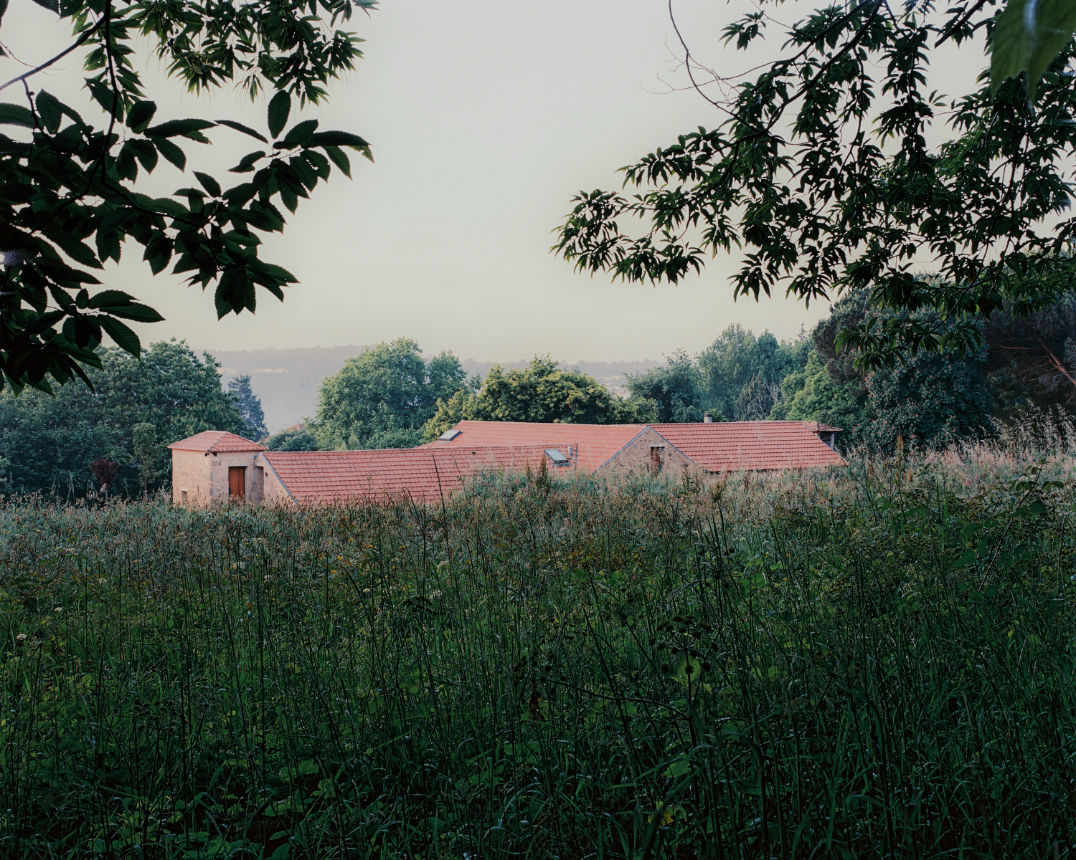
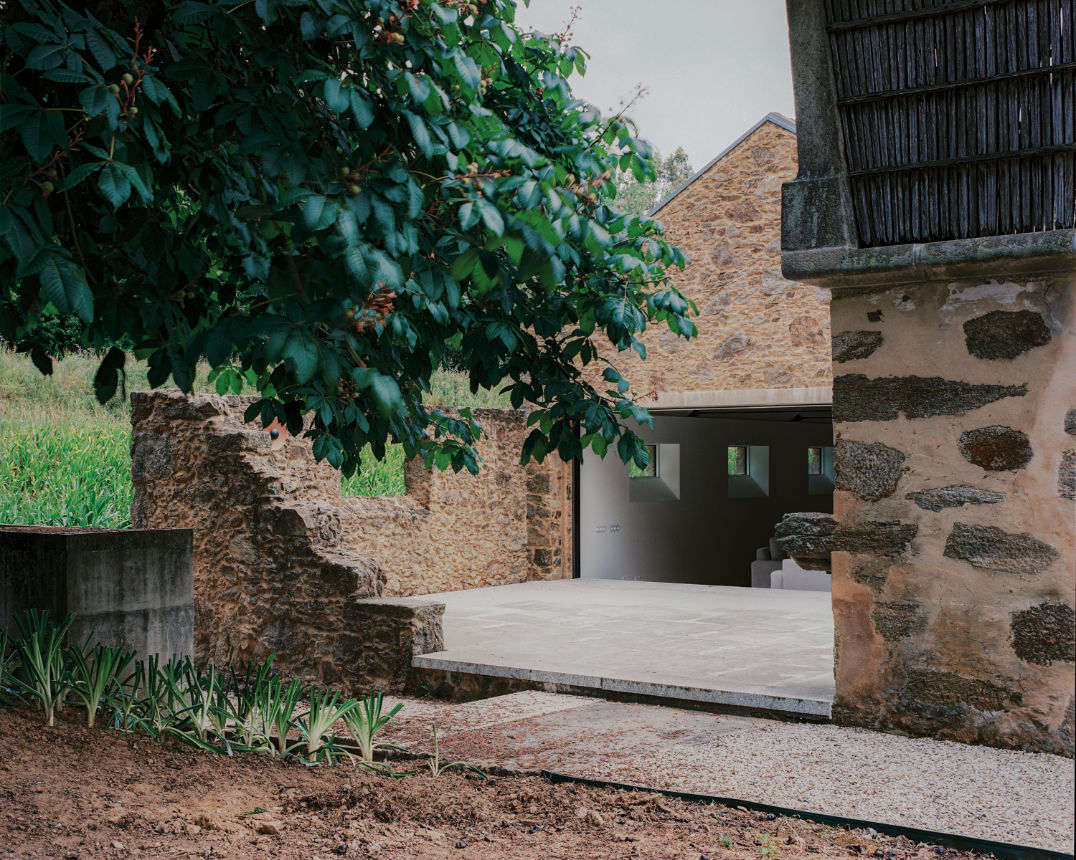
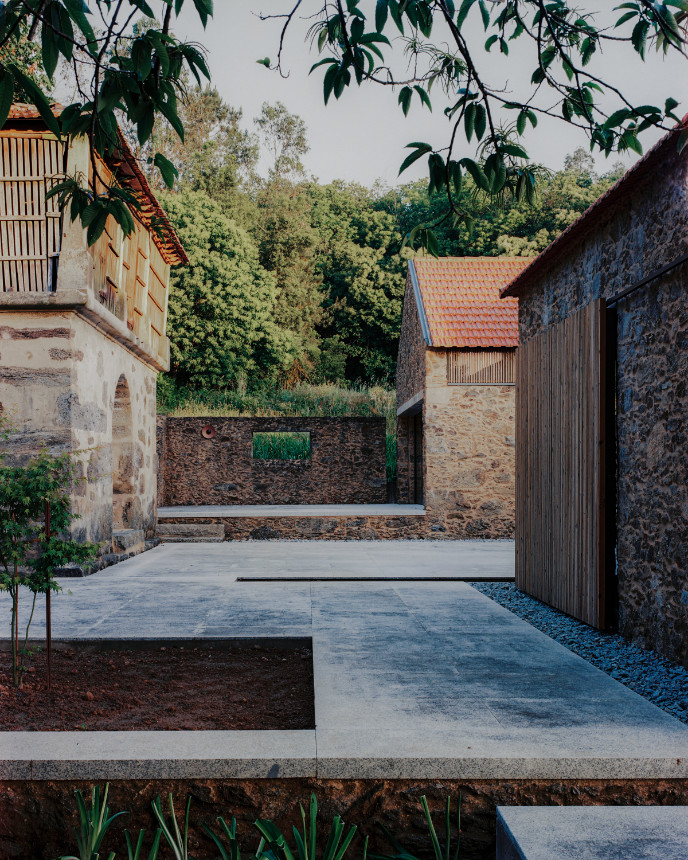
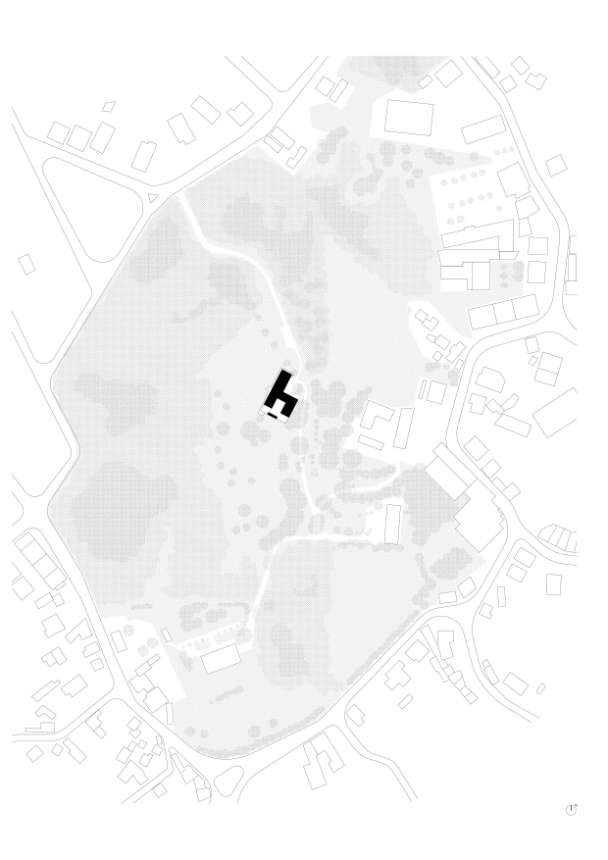
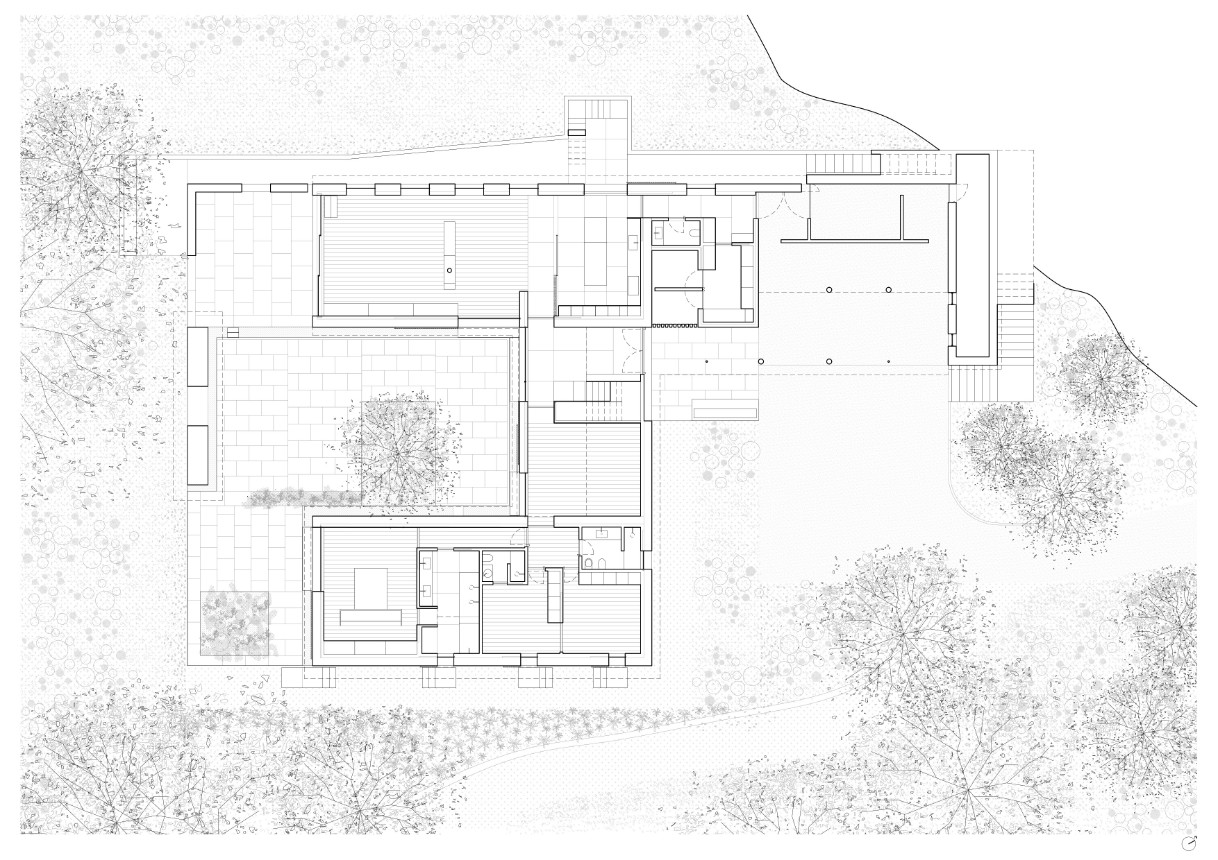
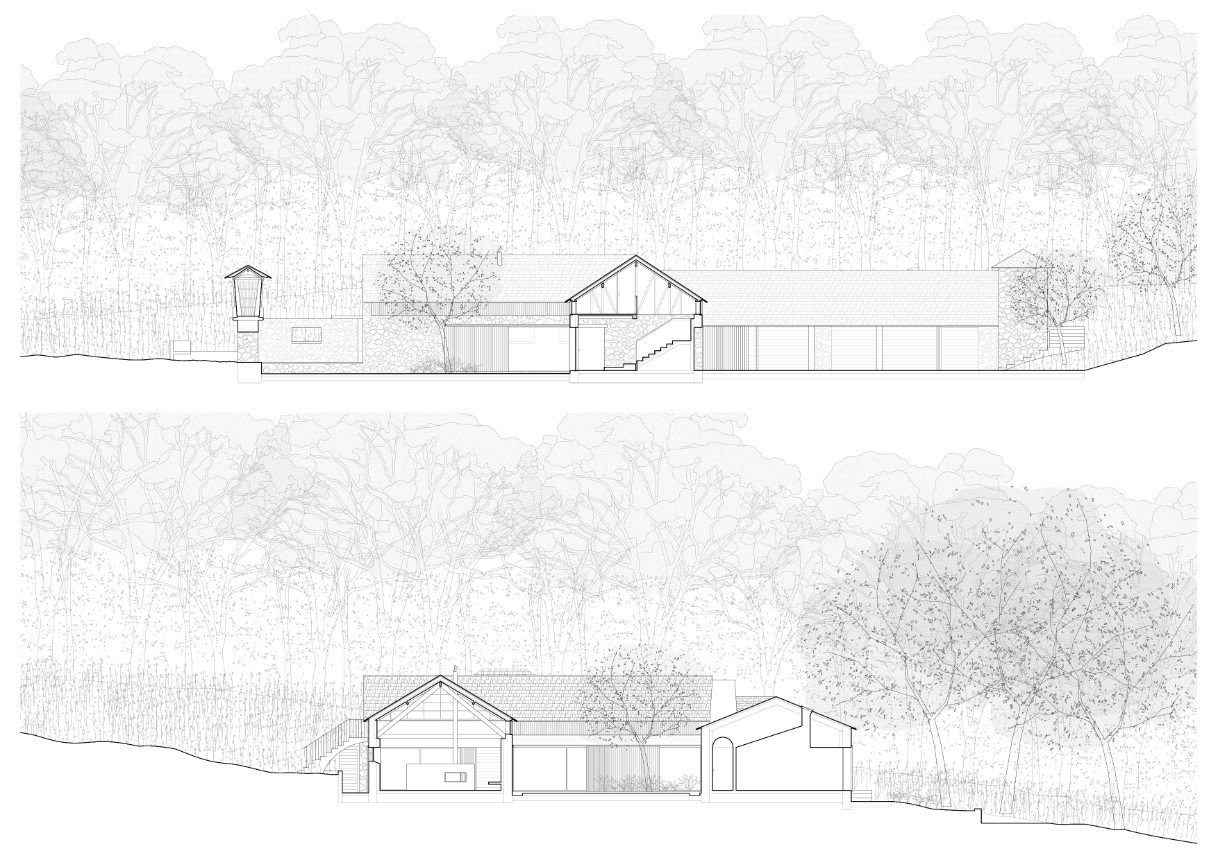
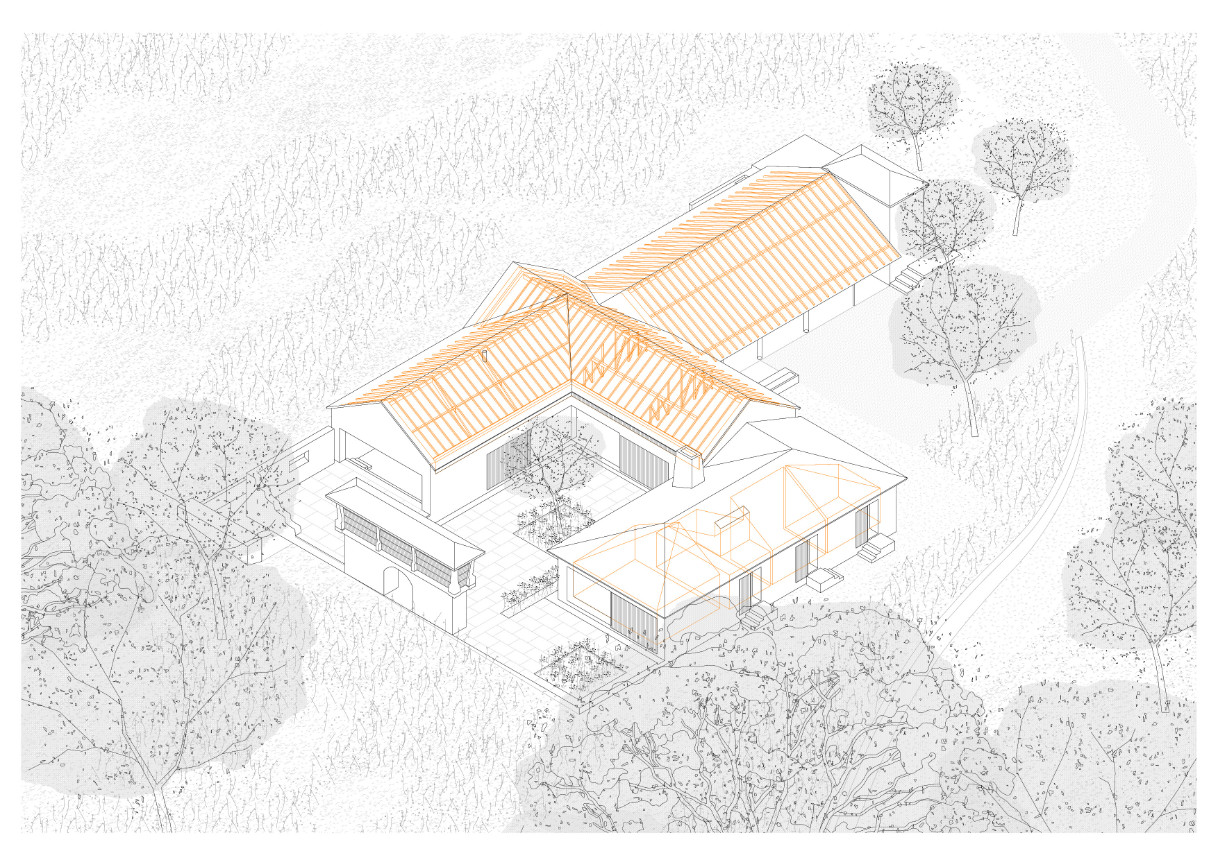
The house is set within a walled site densely planted with mature trees, whose presence defines the character of the place and creates a sense ofprivacy and enclosure. The complex occupies a sloping site and is organised around a courtyard. Its spatial organisation and relationship to the topography were preserved as guiding principles of the intervention.
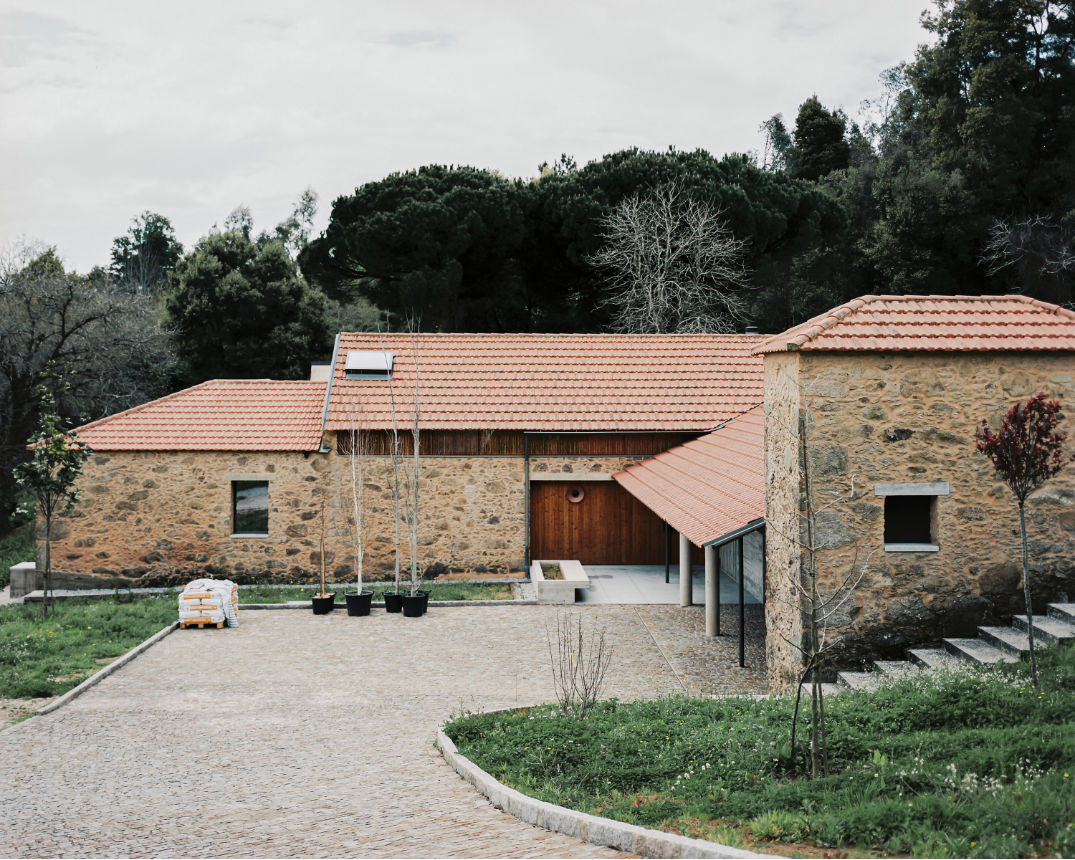
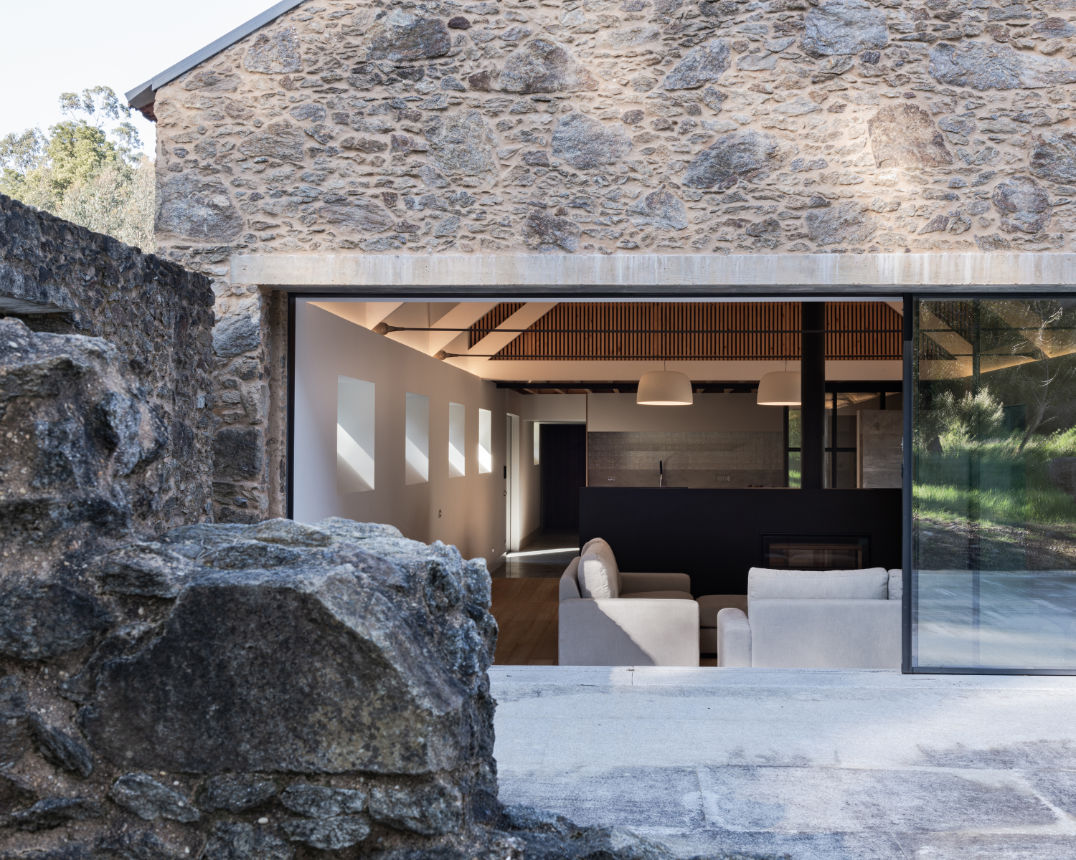
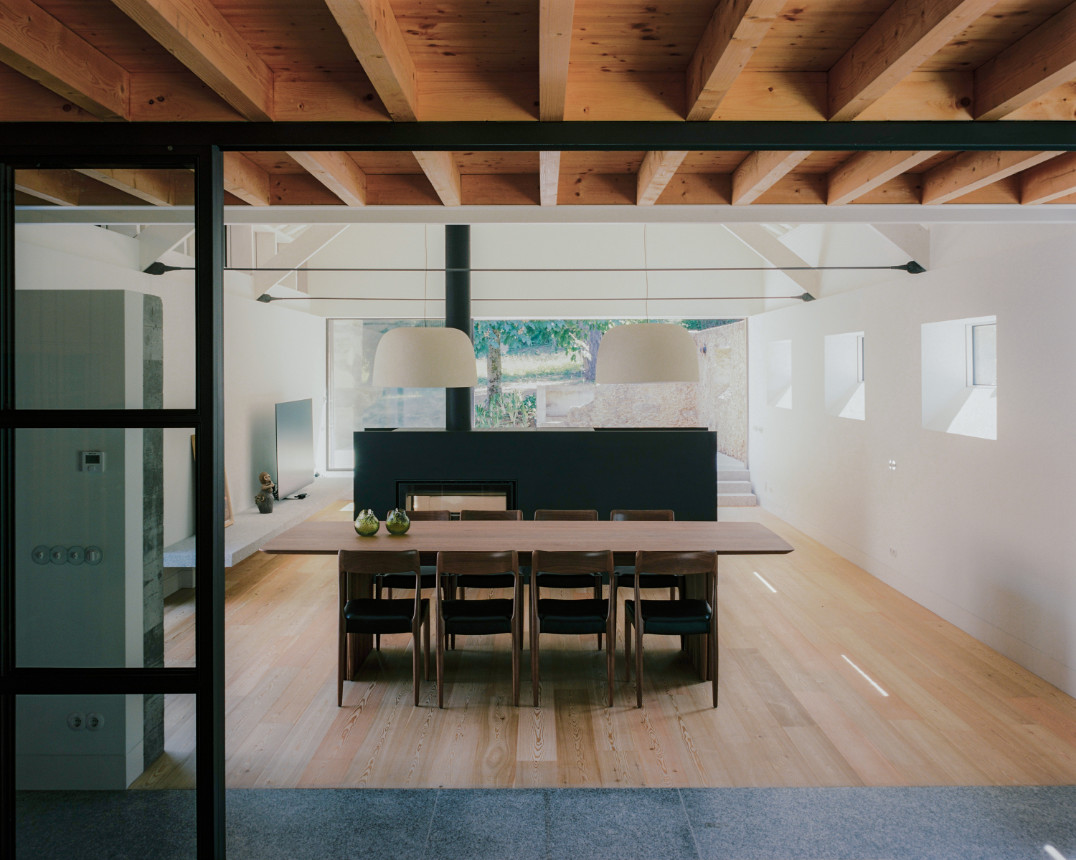
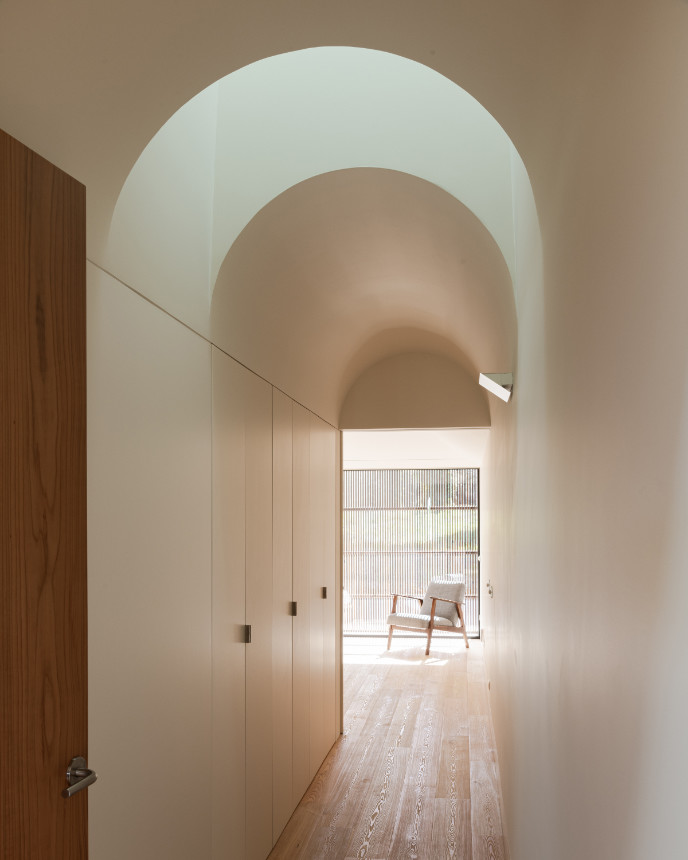
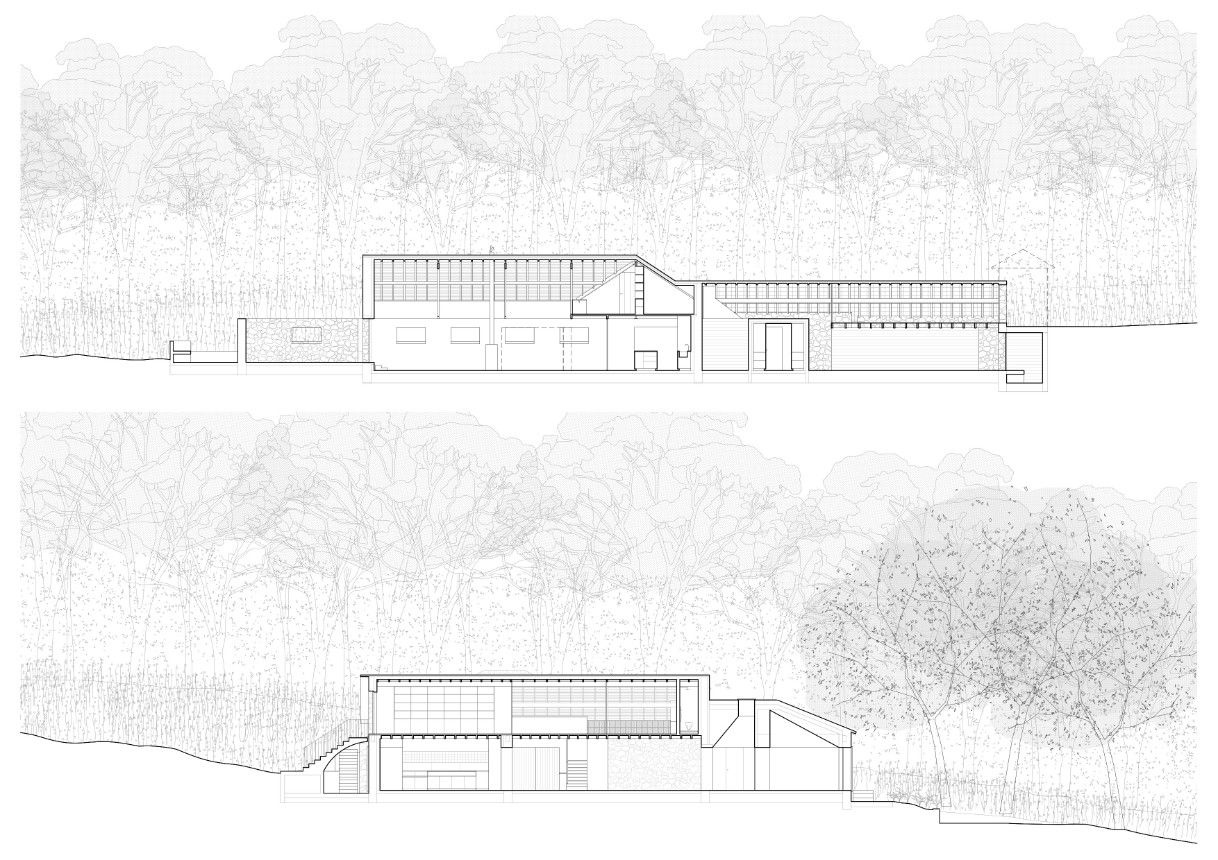
The intervention transforms an existing agricultural ensemble — comprising a cowshed, a barn and the caretaker’s house — into a single-family dwelling, while preserving the original arrangement of the buildings and their spatial relationships. The programme is distributed according to the existing structures: the former cowshed accommodates the living spaces, the caretaker’shouse contains the bedrooms, and the barn accommodates the entrance, circulation spaces, service areas and the garage.
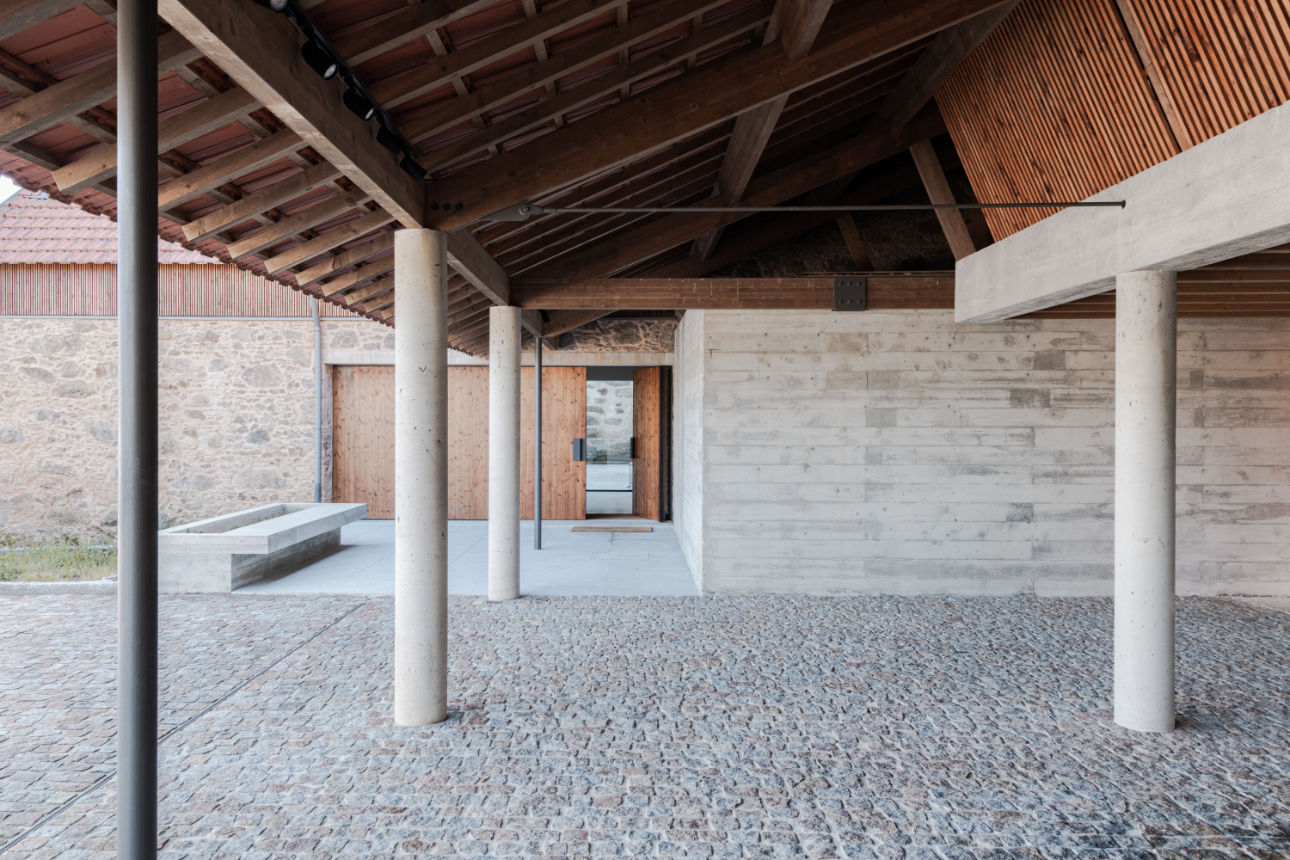
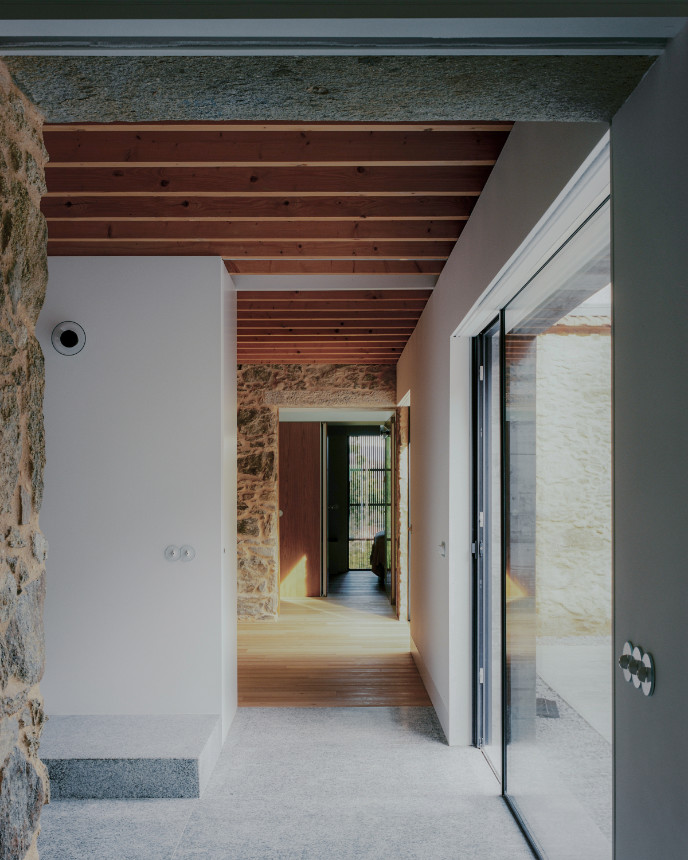
The project preserves the load-bearing granite walls and reconstructs, above them, a lightweight timber structure comprising floors, façades and roof, following the logic of the original construction. This system establishes a clear relationship between a mineral base with high thermal mass and a lightweight, insulated upper structure, contributing to the building’s passive thermal performance.
The environmental strategies build upon solutions already present in the agricultural architecture: deep eaves provide solar protection, a ventilated timber roof promotes air circulation, and thick masonry walls help regulateindoor temperatures. These principles were maintained and enhanced through theaddition of roof insulation and solar-control elements such as external timbershutters.
The construction employs durable, low-maintenance materials — granite, timber and lime-based mortars — and relies on local building knowledge and skilled craftsmanship. The long construction period allowed the materials to stabilise and the house to become gradually integrated into its surroundings, lending it a sense of permanence upon completion.
The project demonstrates how an existing structure can be adapted to bring together form, material and climate, creating comfortable conditions with minimal reliance on active systems while strengthening the relationship between architecture, landscape and everyday life.

